
When a company wants to innovate, the same question usually arises: how can an idea be turned into a real solution?
Innovation is not just about having a good idea. The real challenge lies in transforming that idea into a viable product, a new material, a more efficient industrial process or a technology ready for market deployment. This is where technology centres play a fundamental role.
Although many people are still unsure about what a technology centre actually is, these organisations have become key players within the European innovation ecosystem. Their main role is to connect research, industry and practical application, helping companies develop real technological solutions.
A technology centre is an organisation specialising in applied research and industrial innovation that helps companies and organisations develop, validate and transfer new technologies to the market.
Unlike other organisations within the scientific ecosystem, technology centres work closely with the real needs of industry, participating in projects related to sustainability, digitalisation, new materials, the circular economy and advanced manufacturing.
Where Research Becomes Useful
The best way to understand the role of a technology centre is to think of it as a bridge between science and industry.
On one side are universities and research institutions, where scientific knowledge is generated. On the other are companies that need to apply that knowledge to solve real-world challenges.
Between these two worlds lies a complex stage that often goes unnoticed: validating technologies, developing prototypes, reducing technical risks and adapting innovation to real industrial conditions.
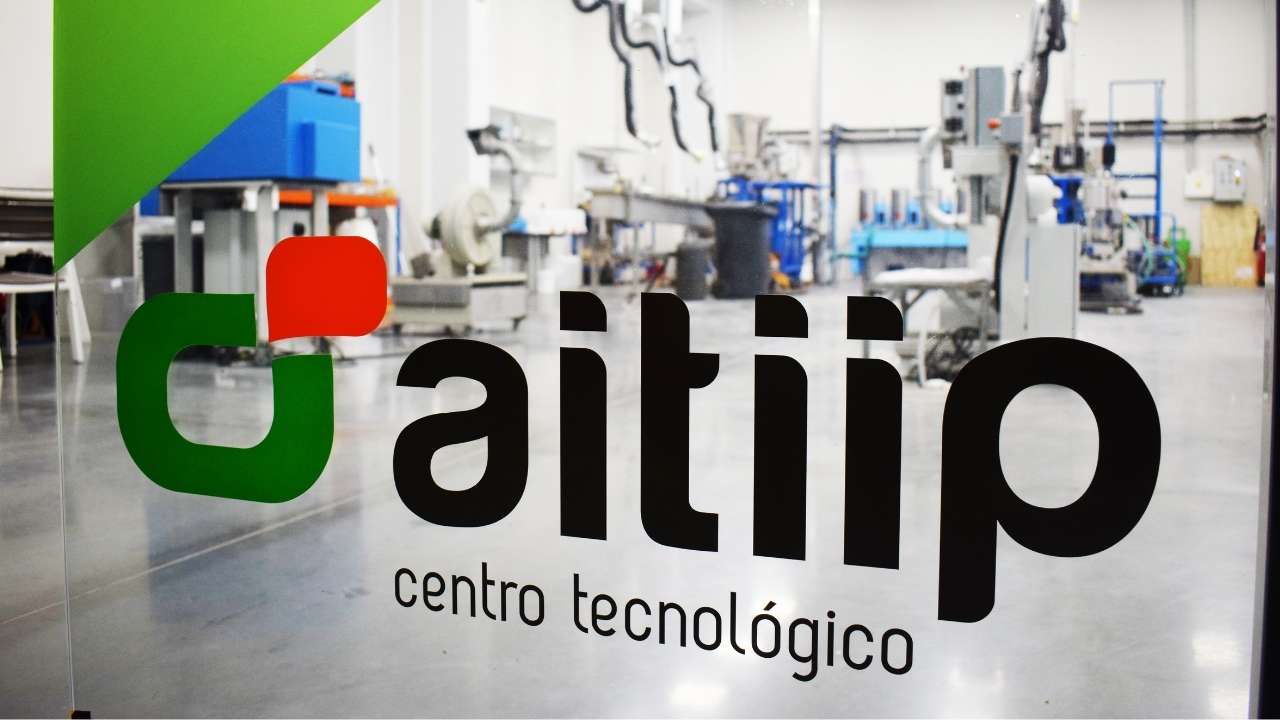
This is where organisations such as Aitiip come in.
Their work covers a wide range of fields:
- Development of New Materials
- Advanced Manufacturing
- Industrial Automation and Digitalisation
- Sustainable Process Design
- Circular Economy
- Prototyping and Technology Validation
Although this work may seem highly technical from the outside, the objective is actually quite simple: to ensure that ideas become solutions that truly work.
Much of this work is carried out within European innovation programmes such as Horizon Europe or circular bioeconomy initiatives such as the Circular Bio-based Europe Joint Undertaking (CBE JU).
The Difference Between Research and Application
One of the most important concepts for understanding what a technology centre is is applied research.
While academic research aims to generate scientific knowledge, applied research uses that knowledge to solve specific problems.
And that is precisely the key difference.
A technology may look highly promising on paper, but that does not necessarily mean it can be used in a real industrial environment. Materials need to be validated, processes tested, designs adapted and performance verified beyond the laboratory.
This can involve very practical actions such as:
- Reducing industrial waste
- Developing biodegradable packaging
- Optimising production processes
- Improving material recyclability
- Designing more sustainable solutions for industry
For this reason, many companies work with specialised technology partners when they need to innovate without taking on the entire technological risk internally.
How Waste Can Be Turned into New Materials
This is where applied innovation stops sounding abstract and becomes much easier to understand.
Today, Aitiip is involved in European projects focused on transforming agri-food waste into biodegradable materials with real industrial applications.
One of these projects is BRILIAN, an initiative that aims to transform waste generated during potato processing into biodegradable thermoplastics.
What makes this project particularly interesting is that materials previously considered waste become valuable raw materials.
The process combines applied research, material transformation and industrial scalability:
- Starch is recovered from agri-food waste.
- The starch is transformed into TPS (thermoplastic starch).
- The material can be used for flexible packaging and agricultural applications.
- At the end of its service life, it biodegrades without generating polluting waste.
Beyond the technology itself, projects like this demonstrate something much broader: the circular economy is no longer just a theoretical concept—it is becoming an industrial reality.
Much More Than Laboratories
There is a widespread perception that technology centres are simply research laboratories.
The reality is quite different.
Many of these organisations work directly with industrial companies to develop technologies that are ready for real production environments, sustainability requirements and market demands.
For example, the European project WOOD4PLASTIC aims to transform agroforestry waste into compostable bioplastics for applications such as food packaging and organic waste collection solutions.
Projects like this bring together expertise from a wide range of disciplines:
- Materials Engineering
- Industrial Processes
- Advanced Manufacturing
- Sustainability
- Technology Validation
However, the ultimate goal is not research for the sake of research. The objective is to develop technically and economically viable solutions for industry.
And that completely changes the way innovation is carried out.
So… How Is a Technology Centre Different from a University or a Consultancy?
This is one of the most common questions people ask when trying to understand what a technology centre is.
Although universities, engineering companies, consultancies and R&D organisations often collaborate, each plays a different role within the innovation ecosystem.
| Organisation | Primary Function | Role in Innovation |
|---|---|---|
| University | Generation of scientific knowledge | Academic research |
| Consultancy | Strategy and management | Advisory and analysis |
| Engineering company | Technical design and implementation | Delivery of solutions |
| Technology Centre | Applied research and industrial validation | Practical technology development |
The main difference lies in the ability to transform research into real industrial applications.
In many cases, technology centres also act as a bridge between companies, universities and international innovation programmes.
Innovation Also Needs Time to Mature
We often talk about innovation as if new technologies appeared overnight. In reality, the process is usually very different.
Behind many industrial breakthroughs lies a long process of testing, refinement and validation that is rarely visible from the outside. Before reaching the market, a solution must prove that it can perform reliably, safely and efficiently under real operating conditions.
This is where technology centres play a particularly important role.
They not only help develop new ideas. They also work to ensure that these solutions can be adapted to industrial processes, address specific needs and remain viable over the long term.
This intermediate stage, which often goes unnoticed, is precisely what enables innovation to move beyond being a promise and become something truly valuable for businesses and society.
When Sustainability Becomes Innovation
One of the areas in which these organisations are playing an increasingly important role is the circular economy.
European industry is currently striving to reduce its dependence on fossil-based raw materials, minimise waste and develop more sustainable production models.
This is where applied research plays a major role.
There are currently projects focused on:
- Recyclability
- Material Reuse
- Bioplastics
- Energy Efficiency
- Remanufacturing
- Waste Valorisation
An interesting example is COMPASS, a European project focused on recovering high-value materials from industries such as the automotive and aerospace sectors.
The project develops advanced remanufacturing processes capable of recovering and reusing composite materials and industrial components that would otherwise end up in landfill.
The combination of sustainability and technological innovation is reshaping a significant part of today's European industry.
Innovation That Reaches Our Everyday Lives
We often associate industrial innovation with highly technical sectors that seem far removed from our daily lives. But that is not always the case.
Technology centres also take part in projects related to food, logistics and food waste reduction.
The European project SISTERS, for example, has developed smart containers capable of monitoring temperature, humidity and gas composition during food transportation using IoT sensors.
The aim has been to improve food preservation, reduce losses and optimise efficiency throughout the agri-food supply chain.
These innovations may go unnoticed by consumers, but they have a significant impact on sustainability, resource efficiency and logistics performance.
Giving Waste a Second Life
Another recent example is RUBBIO, a European project focused on transforming starch-rich food waste—such as leftover bread or potato waste—into advanced materials for sectors including technical flooring and footwear.
The project combines:
- Biotechnology
- Chemical Engineering
- Materials Development
- Circular Economy
It reflects a growing trend across Europe: using applied research to build more sustainable and resilient industrial models.
Why More Companies Are Partnering with Technology Centres
The growing complexity of today's technologies means that many companies require external support to innovate.
This is particularly true in areas such as:
- Sustainability
- Digitalisation
- Automation
- New Materials
- Artificial Intelligence
- Energy Transition
In many cases, collaborating with specialised organisations helps companies reduce technological risk, accelerate technology validation and gain access to highly specialised expertise without having to develop all these capabilities internally.
In an environment where innovation is advancing at such a rapid pace, this can make a significant difference.
Innovation Is No Longer Optional
Europe is undergoing an industrial transformation shaped by sustainability, digitalisation, the bioeconomy and decarbonisation.
In this context, organisations capable of connecting research and practical application are taking on an increasingly relevant role.
That is why technology centres today take part in European R&D projects, international innovation networks and industrial strategies aimed at building more sustainable and competitive production models.
More Than Laboratories: The Real Role of Technology Centres
Understanding what a technology centre is also means understanding how industrial innovation works today.
These organisations help transform research into real-world solutions by connecting science, industry and technological development through applied research.
Whether developing bioplastics from agri-food waste, reducing food waste through smart sensors or reusing advanced materials from the aerospace industry, their role extends far beyond traditional research.
They are key players in the transition towards a more sustainable, competitive and innovative industrial landscape.
This is precisely why an increasing number of companies choose to collaborate with organisations capable of turning technical knowledge into real industrial impact.
If you would like to learn more about European innovation projects, the circular economy or the development of applied technologies for industry, you can contact Aitiip Centro Tecnológico:
P.I. Empresarium, C/Romero No. 12, 50720 Cartuja Baja, Zaragoza, Spain
+34 976 46 45 44
This email address is being protected from spambots. You need JavaScript enabled to view it.
Frequently Asked Questions About Technology Centres
What does a technology centre do?
A technology centre carries out applied research and develops solutions designed to address real industrial challenges. Its work includes technology validation, materials development, automation, sustainability and the transfer of innovation to industry.
What is the difference between a technology centre and a university?
Universities primarily focus on academic research and the generation of scientific knowledge. Technology centres focus on practical application, industrial validation and the development of solutions that are ready for real business environments.
Do technology centres work with companies?
Yes. In fact, a large part of their activity involves collaborating with industrial companies on innovation, sustainability, advanced manufacturing and technology development projects.
What is applied research?
Applied research uses scientific knowledge to solve specific problems and develop practical solutions for industry, sustainability and technology.
What are TRLs?
Technology Readiness Levels (TRLs) are an internationally recognised scale used to measure the maturity of a technology, from early-stage research through to commercial validation.
What role do technology centres play in Europe?
They actively participate in European innovation programmes such as Horizon Europe and CBE JU, collaborating with companies, universities and industrial organisations on international applied R&D projects.